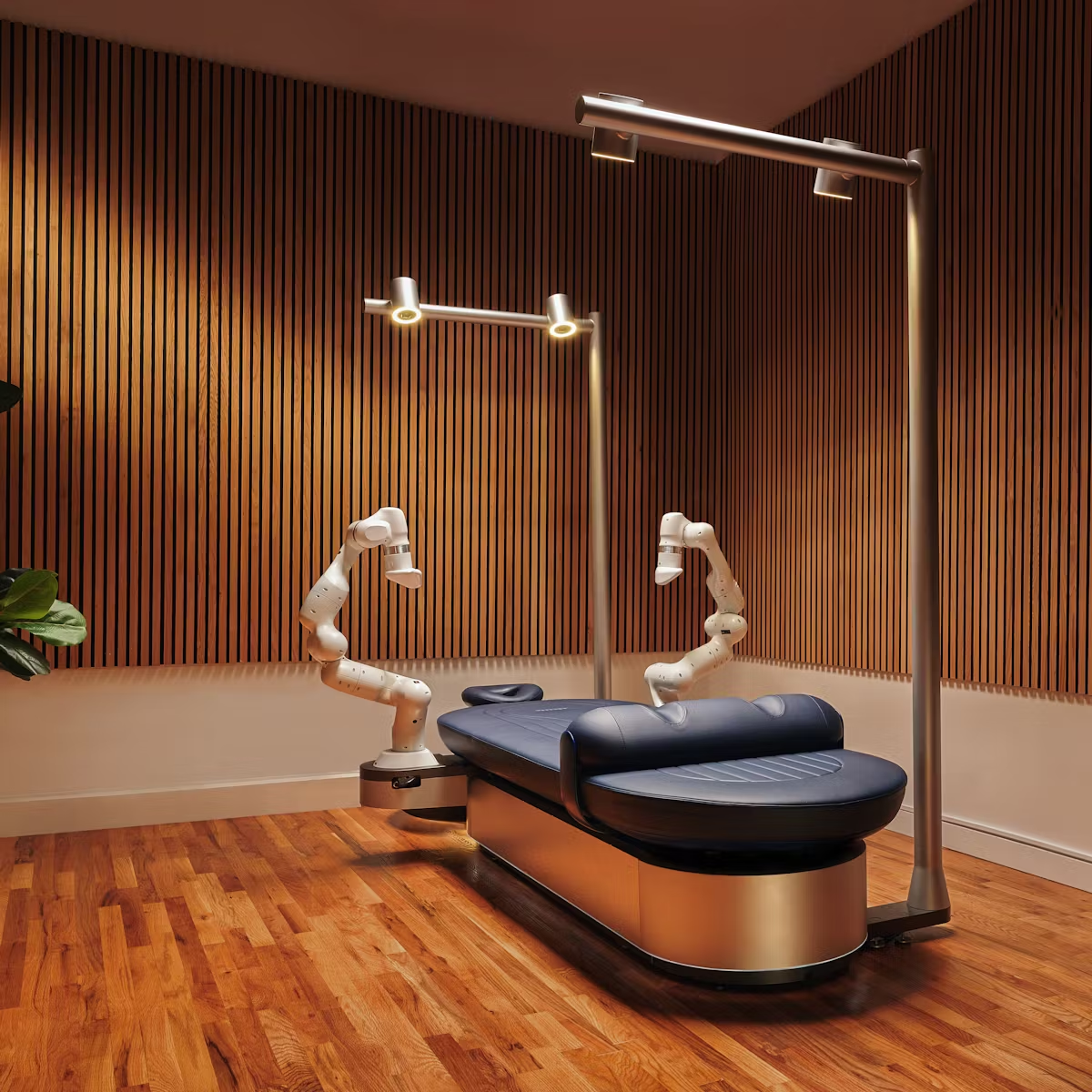
It was announced today that Tom Brady will serve as Chief Innovation Officer for Aescape, a fast-growing AI-powered robotics company that specializes in automated massage and recovery technology. Brady will bring his renowned longevity and recovery methods into Aescape’s robotic massage systems and expand the company’s reach from luxury hotels and high-end gyms to the locker rooms of professional sports teams.
Why Robotic Massage?
Aescape uses AI and 3D mapping to analyze a user’s body to identify muscle tension and tailor the massage to specific needs in seconds. It can even target individual knots or pressure points and ensure precise pressure and coverage for repeatable sessions every time. It is one more example of how AI and automation eliminate human variability. Its automated cleaning protocols between sessions enhance hygiene and reduce risks which is a concern of human massage sessions. Not only can it outperform less experienced therapists, one Aescape unit can handle hundreds of sessions weekly without breaks, reducing labor costs by up to 70% compared to hiring staff. At $60–$120 per session, Aescape is often cheaper than human therapists that typically charge $100+ per hour. Think of it as a professional massage therapist that never gets tired and works at a discount.
What will Hapen to Existing Massage Therapists
As of 2025, there are approximately 321,000 massage therapists practicing in the United States. As an IT network engineer and technical writer, I’ve spent years documenting the usual story of how AI can free IT support staff from tedious, repetitive work, enabling them to tackle higher-value projects that benefit both their careers and their employers. Aescape’s approach follows a similar philosophy. Their CEO argues that robotic massage technology ‘complements’ human therapists by handling routine, high-volume sessions while freeing professionals to focus on personalized care that requires human intuition and connection. This shift allows therapists to either develop new skills in AI oversight or expand into specialized areas like holistic and integrative therapies.” This always sounds well and good, but if a single robotic massage unit can do the work of several human therapists, how many humans do you really need at a massage facility?
AI systems are rapidly transforming the pathways into several professions by automating the foundational tasks that newcomers once relied on to build expertise and launch their careers. Financial firms have stopped hiring interns for spreadsheet work because AI completes these tasks faster and more accurately. Law firms are reducing their hiring of paralegals and junior associates since AI can handle much of the research and support workload that traditionally trained new professionals. In massage therapy, next-generation machines can deliver precision massages that rival or surpass the best professionals, removing a traditional entry point for aspiring therapists who previously depended on hands-on experience to refine their skills and grow their careers. have always relied on to build their skills and establish their careers.
Conclusion
There is no doubt that there are advantages to robot massage, however there are other human elements such as empathy and intuition that cannot be replaced by AI powered machines. The fact is that those 300,000 massage therapists in the U.S. might not be the only ones sweating as AI and robots together flex their way into all aspects of our lives. Toss in 100,000 jobs from this industry, 75,000 from another, and you start wondering what the populous will do for a living? Even If the tech overlords are right and we’re all just chilling in our utopian future, stress-free and jobless, we won’t need massages anyway.


